
 Natural Pairing
 Fiery & Bold


- FSSAI Certified
- ISO 22000
- Sudan Dye Tested
- Organic Available
Export Grade — Multiple Heat Levels
Chilli Powder Exporter India — Premium Red Chilli & Capsicum Powder
Capsicum annuum L. | Family: Solanaceae
UnitedSpices is a trusted chilli powder exporter in India, grinding sun-dried red chillies sourced from the growing belts of Andhra Pradesh, Karnataka and Madhya Pradesh. India produces over 25% of the world’s chillies, and our powder — ground from Guntur, Kashmiri, Byadagi and S17 varieties — delivers precise heat (8,000–50,000 SHU) and rich colour (80–180+ ASTA), HPLC and lab-verified on every batch. Milled and packed to the same rigorous quality standards we apply across our range, including our coriander powder, cumin powder and black pepper.
Heat Range (SHU)8,000 – 50,000
ASTA Colour Value80 – 180+
OriginAndhra Pradesh & Karnataka
MoistureMax 10%
Min. Order Qty500 kg
Export MarketsUSA, EU, UAE, Mexico, Asia
Available Varieties & Forms
- Lab Tested (SHU & ASTA)
- Worldwide Export
- Bulk Pricing Available
- Dedicated Support
About Our Chilli Powder
Chillies (Capsicum annuum) are cultivated across India on over 800,000 hectares, making India the world’s largest producer and most diverse supplier — with dozens of regional varieties spanning every combination of heat, colour and flavour. From the punishing 30,000–50,000 SHU of Guntur Sannam S4 to the mild, colour-rich Kashmiri chilli (2,000–5,000 SHU), Indian chilli powder commands global markets for its consistency, safety and value.
At UnitedSpices, we source from registered farms in Andhra Pradesh (Guntur, Warangal), Karnataka (Byadagi, Hubli-Dharwad) and Madhya Pradesh (Khargone). Each lot is graded for colour (ASTA method), heat (HPLC capsaicin analysis) and moisture before milling in our GMP-certified facility, under the same estate-to-shipment protocols that govern our coriander powder and cumin powder exports.
Why Choose Our Chilli Powder?
- SHU-rated heat levels verified by HPLC capsaicin analysis (8,000–50,000 SHU range)
- ASTA colour values lab-tested for every batch (80–180+ range available)
- Four major varieties: Guntur, Kashmiri, Byadagi and S17/Teja
- Clean label — no synthetic colours, no added fillers, no Sudan dye
- Custom mesh grinding: 20, 40, 60, 80 mesh powder fineness
- Whole, crushed and powder forms available from a single source
- Oleoresin-grade chillies available for extract production
- Full pesticide residue screening and aflatoxin testing per batch
Product Identity
| Common Names | Chilli Powder, Chili Powder, Red Mirch, Lal Mirch |
|---|---|
| Botanical Name | Capsicum annuum L. |
| Family | Solanaceae |
| Part Used | Dried ripe fruit, ground to powder |
| Country of Origin | India |
| Growing Regions | Andhra Pradesh (Guntur), Karnataka (Byadagi), Madhya Pradesh |
| Harvest Season | February – May & September – December |
| HS Code | 0904 21 00 (Whole) / 0904 22 00 (Ground) |
Sensory Profile by Variety
| Guntur (S4) | Deep red, intense heat, pungent |
|---|---|
| Kashmiri | Brilliant red, mild heat, fruity |
| Byadagi | Dark maroon, moderate heat |
| S17 / Teja | Bright red, very high heat |
| Powder Texture | Fine, free-flowing |
Varieties, Heat Levels & Colour Standards
Indian chillies are graded primarily by heat level (SHU — Scoville Heat Units), colour value (ASTA — American Spice Trade Association) and physical pod characteristics. We supply all major varieties with lab-verified SHU and ASTA data.
Variety Comparison
Guntur Sannam S4
Grown in Andhra Pradesh, delivering intense heat and high capsaicin content. The standard choice for hot sauces and chilli pastes.
Heat: 30,000–50,000 SHU
ASTA 100–130 Hot sauces
S17 / Teja
Grown in Andhra Pradesh and Telangana, the hottest variety we supply, with bright red colour. Preferred for oleoresin and extract production.
Heat: 35,000–50,000 SHU
ASTA 120–150 Oleoresin
Kashmiri Mirch
Grown in Kashmir and Himachal Pradesh, prized for brilliant colour with very mild heat. The preferred choice for tandoori masala and curry blends.
Heat: 2,000–5,000 SHU
ASTA 140–180+ Tandoori, curry
Byadagi
Grown in Karnataka, offering a balanced heat-to-colour ratio. A versatile all-purpose grade for spice blends and curry powder.
Heat: 8,000–15,000 SHU
ASTA 100–140 Spice blends
Commercial Grades
| Variety / Type | Growing Region | Heat (SHU) | ASTA Colour | Primary Use |
|---|---|---|---|---|
| Guntur Sannam S4 | Andhra Pradesh | 30,000–50,000 | 100–130 | Hot sauces, chilli paste |
| S17 / Teja | AP, Telangana | 35,000–50,000 | 120–150 | Oleoresin, extract |
| Kashmiri Mirch | Kashmir, HP | 2,000–5,000 | 140–180+ | Tandoori masala, curry |
| Byadagi | Karnataka | 8,000–15,000 | 100–140 | Spice blends, curry powder |
| S10 / Reshampatti | AP, Tamil Nadu | 12,000–25,000 | 90–120 | Food manufacturing, retail |
| Byadagi Dabbi | Karnataka | 10,000–18,000 | 120–160 | Premium spice blends |
Adulteration Risk Alert: Sudan Dye & Colour Extenders
Chilli powder is one of the most adulteration-prone spices globally, with synthetic dyes (Sudan Red I–IV), brick powder and colour extenders documented in international supply chains. Every UnitedSpices consignment is screened for Sudan dye, synthetic colourants and heavy metals at an NABL-accredited laboratory before grinding, with a Sudan Dye Test Report issued for every export shipment. We operate a zero-tolerance adulteration policy.
Why Capsaicin Content Defines Chilli Powder Heat
Capsaicin is the active compound responsible for the pungency of chilli powder, measured on the Scoville Heat Unit (SHU) scale via HPLC analysis. Every UnitedSpices batch is lab-verified for capsaicin concentration and ASTA colour value before shipment, so buyers receive a consistent, declared heat level batch after batch — from mild 2,000 SHU Kashmiri to fiery 50,000 SHU Guntur and S17/Teja.
8K–50K
SHU Heat Range
Heat & Active Compounds
| Capsaicin Content (HPLC) | 0.1 – 1.0% (variety dependent) |
|---|---|
| Scoville Heat Units (SHU) | 2,000 – 50,000 (variety dependent) |
| Essential Oil Content | 0.1 – 2.5% v/w |
| Oleoresin Yield | 8 – 14% |
| Total Ash | Max 8.0% |
| Acid-Insoluble Ash | Max 1.3% |
Colour & Physical Parameters
| ASTA Colour Value | 80 – 180+ (variety dependent) |
|---|---|
| Moisture Content | Max 10% (max 8% for export grade) |
| Mesh Size Available | 40, 60, 80, 100 mesh |
| Bulk Density | 450 – 550 g/L |
| Extraneous Matter | Nil |
| Flow Properties | Free-flowing, non-caking |
Microbiological Parameters
| Total Plate Count | < 1,00,000 CFU/g |
|---|---|
| Yeast & Mould | < 1,000 CFU/g |
| E. coli | Absent / 10g |
| Salmonella | Absent / 25g |
| Staphylococcus aureus | Absent / 25g |
| Aflatoxin (B1+B2+G1+G2) | < 10 ppb (EU norm) |
| Ochratoxin A | < 3 ppb |
Safety & Contaminant Testing
| Sudan Dye I–IV | Not Detected (HPLC, LOD 0.5 ppm) |
|---|---|
| Synthetic Colourants | Not Detected |
| Heavy Metals — Lead (Pb) | < 1.0 ppm |
| Heavy Metals — Arsenic (As) | < 1.0 ppm |
| Pesticide Residues | Compliant with EU MRL / FSSAI |
| GMO Status | Non-GMO verified |
Nutritional Profile (per 100g)
| Energy | 282 kcal |
|---|---|
| Carbohydrates | 49.7 g |
| Dietary Fibre | 34.2 g |
| Protein | 13.5 g |
| Total Fat | 14.3 g |
| Vitamin A | 41,600 IU |
Shelf Life & Storage
| Shelf Life | 24 months from packing date |
|---|---|
| Storage Temperature | 15 – 25°C, cool and dry |
| Relative Humidity | Max 65% RH |
| Light Exposure | Store away from direct sunlight to preserve colour value |
| Special Note | Store airtight; ASTA colour degrades with heat and light exposure |
Hot Sauces & Chilli Pastes
High-heat Guntur and S17/Teja grades are the backbone of commercial hot sauces, sriracha-style pastes and chilli oil condiments requiring a declared, consistent SHU level.
Spice Blends & Masalas
A core component of curry powder, tandoori masala, garam masala and regional blends, where Kashmiri and Byadagi grades deliver colour without overwhelming heat.
Processed Meats & Sausages
Used extensively in dry rubs, sausage seasoning, pepperoni and chorizo formulations, and marinated meat products across global processed-meat manufacturing.
Food Manufacturing & Ready Meals
A high-volume ingredient in frozen ready meals, instant noodle seasoning sachets, soup powders and meal-kit spice packets, using fine mesh grades for even dispersion.
Oleoresin & Extract Production
High-capsaicin Guntur and S17/Teja are preferred feedstock for oleoresin and standardised capsaicin extract manufacturing for the flavour and nutraceutical industries.
Foodservice & Restaurant Use
Bulk-packed chilli powder supplied to restaurant chains, catering operations and quick-service kitchens for consistent heat and colour across every dish.
Snack Foods & Seasoned Coatings
A key seasoning ingredient in chips, extruded snacks, roasted nuts and seasoned coatings, where Kashmiri and Byadagi grades add colour appeal with moderate heat.
Pickles & Condiments
Widely used in Indian pickle formulations (achar), chutneys and chilli-garlic condiments across South Asian, Middle Eastern and African cuisines.
Nutraceutical & Capsaicin Supplements
Standardised capsaicin extracts are used in thermogenic supplements, topical pain-relief formulations and metabolism-support nutraceutical products.
PP / HDPE Woven Bags
25 kg – 50 kg polypropylene woven bags with inner moisture-barrier liner. Standard export format for most grades, protecting colour and heat during transit.
Multi-Layer Paper Bags
3-ply kraft paper bags (10 kg – 25 kg) with inner moisture-barrier liner — preferred format for fine mesh grades sensitive to caking.
Private Label / Retail
Custom-branded pouches, jars and retail cartons from 50 g to 2 kg. Full private label design and printing services available.
Flexi / Jumbo Bags
500 kg – 1,000 kg FIBC bulk bags for industrial volumes, ideal for oleoresin extraction and large-scale food manufacturing customers.
Port of Loading
Chennai / Cochin / Tuticorin / Mundra, India
Incoterms
FOB, CIF, CFR, EXW, DAP — all terms negotiable
Lead Time
10–15 business days from order confirmation
Export Documentation Available
- Phytosanitary Certificate
- Certificate of Origin
- HPLC Capsaicin & ASTA Colour Report
- Certificate of Analysis (CoA)
- Fumigation Certificate
- MSDS / SDS Sheet
- Sudan Dye Test Report
- Organic Certificate (on request)
- Halal & Kosher (on request)
Our Quality Commitment
Chilli powder is one of the most frequently adulterated spices in international trade — Sudan dye and other synthetic colourants are illegally added to boost colour value in low-grade material, triggering repeated EU RASFF alerts and market recalls. At UnitedSpices, we operate a zero-tolerance adulteration policy: every consignment undergoes HPLC screening for Sudan Dye I–IV and synthetic colourants at an NABL-accredited third-party laboratory before shipment.
Every lot is source-verified, variety-declared (Guntur / Kashmiri / Byadagi / S17-Teja) and tested for both capsaicin (HPLC) and ASTA colour value before grinding. Our procurement network spans FSSAI-registered growers across Andhra Pradesh, Telangana and Karnataka, with pesticide MRL compliance monitored against EU and USFDA standards.
For premium buyers who specify variety and heat level — for example, high-SHU S17/Teja for oleoresin extraction, or high-ASTA Kashmiri for colour-forward retail blends — we provide full batch-level variety, SHU and ASTA declarations on the Certificate of Analysis for supply chain traceability.
- HPLC screening for Sudan Dye I–IV on every export batch
- HPLC capsaicin testing and ASTA colour value verification
- Full pesticide residue screening (500+ compounds, EU MRL compliant)
- Aflatoxin and Ochratoxin A testing per EU regulation
- Temperature-controlled grinding to preserve colour and volatile oil
- GMP-certified facility with ISO 22000:2018 FSMS
- Batch-specific Certificate of Analysis with variety, SHU and ASTA declaration
- NABL-accredited third-party laboratory pre-shipment testing
FSSAI Certified
Food Safety & Standards Authority of India — compliant processing facility.
ISO 22000:2018
Food Safety Management System certified — international quality standard.
Sudan Dye Compliance
HPLC-screened and third-party pre-shipment inspected for illegal colourants.
Organic Certified
NPOP & NOP organic certification available for designated batches.
Halal & Kosher Certified
Available upon request for Middle East, Southeast Asia and kosher markets.
Spices Board India
Registered with the Spices Board of India — compliant and traceable export.
Chilli Powder Export — Frequently Asked Questions
Common questions from buyers sourcing red chilli and capsicum powder from India.
What chilli varieties do you export?
We supply four major Indian varieties — Guntur (intense heat, high capsaicin), Kashmiri (brilliant colour, mild heat), Byadagi (balanced heat and colour) and S17/Teja (very high heat, bright red) — each lab-verified for SHU and ASTA colour value.
What is the SHU (Scoville) heat range of UnitedSpices chilli powder?
Our chilli powder spans 8,000–50,000 SHU depending on variety, verified by HPLC capsaicin analysis on every export batch, from mild Kashmiri to fiery Guntur and S17/Teja grades.
How do you test for Sudan dye and synthetic colourant adulteration?
Every consignment is screened for Sudan Dye I–IV and synthetic colourants at an NABL-accredited laboratory, with a Sudan Dye Test Report issued for every export shipment. We operate a zero-tolerance adulteration policy.
What is the difference between Guntur and Kashmiri chilli powder?
Guntur chilli delivers intense heat (30,000–50,000 SHU) with moderate colour, making it the standard choice for hot sauces and chilli pastes. Kashmiri chilli is prized for its brilliant red colour (140–180+ ASTA) with very mild heat (2,000–5,000 SHU), making it the preferred choice for tandoori masala and colour-forward curry blends. We supply both, separately or blended to specification.
What is the minimum order quantity (MOQ) for chilli powder export?
Our standard MOQ for chilli powder is 500 kg per SKU and variety. Smaller sample quantities are available on request for quality evaluation.
How can I get a price quote for bulk chilli powder?
Contact our export team via the Request a Quote form, WhatsApp or phone with your required variety, heat level, quantity and destination port. We typically respond within 24 hours.
Related Products
Explore more premium Indian spices from UnitedSpices
Natural Pairing
 Best Seller
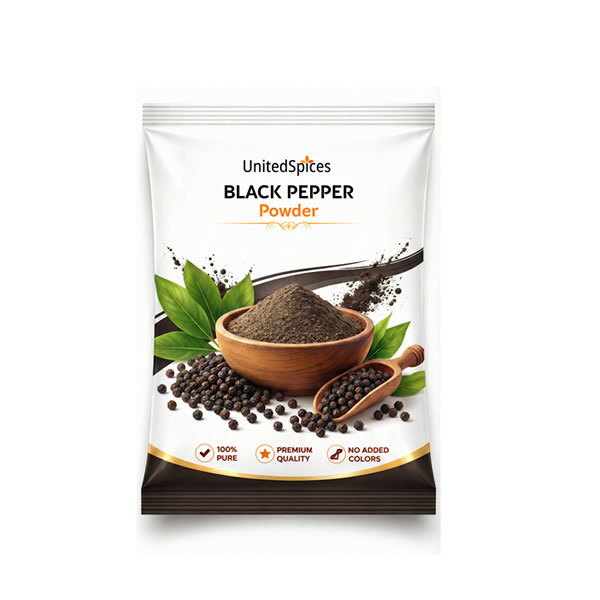 Premium
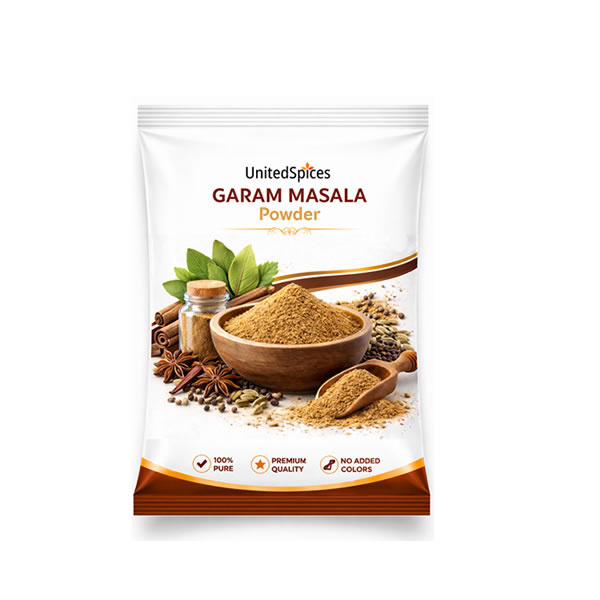 Blend
Blend